Broken or chipped teeth are another common dental emergency. This might happen as a result of sports injuries, accidents, or biting down on something hard. Try to save any broken tooth pieces since a dentist might be able to put them back together. Use gauze to halt any bleeding after cleaning your mouth with warm water. Pain and swelling can also be reduced with a cold compress. It is essential to get dental care very away in order to stop additional damage and restore the tooth’s appearance and functionality.
Although knocked-out teeth are one of the most concerning dental emergencies, they are frequently treatable with prompt care. Pick up a knocked-out tooth by its crown, or chewing surface, rather than its root. If it’s soiled, gently clean it with water without scrubbing or removing any associated tissue. Hold the tooth in its socket while you seek dental care, if at all possible. Keep the tooth wet by submerging it in a container of milk or saliva if reinserting it is not an option. The likelihood of saving the tooth increases with prompt action, ideally within an hour.
Soft tissue injuries like cuts to the tongue, cheeks, or gums are also considered dental emergencies. Accidents, falls, and biting down on sharp objects can all cause these injuries. To lower the risk of infection, rinse the mouth with warm salt water. To stop bleeding, gently massage with gauze. Get medical help right away if the bleeding doesn’t stop within ten to fifteen minutes. Despite their
Dental issues don’t always occur during regular business hours and will likely happen at the most inconvenient time, whether that is a holiday weekend or in the middle of the night. The word dental emergency is used to describe a wide range of conditions that call for instant attention to a dental problem so as to maintain dental health and to avoid more extensive, expensive dental problems such as pain and dental trauma. You can help determine which situation is most dangerous, as well as what steps to take in an emergency, and when to call a Charlotte dentist, by becoming familiar with the various types of dental emergency as described here. A dental emergency is defined as a situation that requires immediate attention by a dentist because of: severe discomfort, trauma to the mouth, or uncontrolled bleeding.
Tooth pain
Toothache is one of the most prevalent dental problems. In the case of a mild toothache, there may be little reason for immediate concern. However, if the toothache is more severe or if it has persisted, the pain can be a warning sign of serious damage to the tooth, such as an abscess or a deep cavity. You may be able to manage a mild toothache on your own by taking non-prescription medication or utilizing an effective home remedy. In more severe cases, however, it is very important that you see your dentist as quickly as possible in order to address the underlying cause of the toothache before it worsens and leads to more serious problems, such as the spread of bacteria or a dental abscess. In the interim before your scheduled dental appointment, you can apply a cold compress to your jaw to help ease any swelling and reduce discomfort.
Chipped or broken teeth
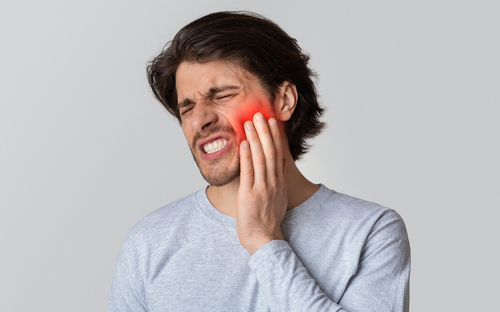 A dental injury is also a dental emergency if you chip or break your teeth. A person who takes part in contact sports or who chews on particularly hard objects, such as an un-popped piece of popcorn, or a person who falls on an object is prone to chipping or breaking their teeth. You should rinse your mouth with warm water and place a piece of gauze on the broken teeth to prevent any bleeding. If the person has been in an accident, make sure that you save any pieces of the broken tooth; the dentist may be able to repair the tooth with the fragments. In the meantime, you can place a cold compress on the side of the face where the tooth is broken to decrease any pain or swelling you may be experiencing. The sooner you can see your dentist, the faster the dentist will be able to evaluate and restore your tooth.
Displaced teeth
Another dental emergency is one where the tooth has been fully displaced, or knocked out of its position in the gums or socket. While such an injury might at first appear quite disturbing, a tooth has a high likelihood of survival if it is treated correctly and very promptly. To handle the knocked-out tooth, handle the crown (the area you chew with) instead of the root. If the tooth is dirty, gently rinse it with water and do not remove or clean any associated tissue. If you are able, put the tooth back in the tooth socket right away; if you are unable, keep the tooth in your mouth while you are waiting to see the dentist, or you can keep the tooth submerged in a glass of water or milk to keep it from drying out. As soon as possible, preferably in an hour, see your dentist to try and replace the tooth. The better the chances of saving the tooth, the faster the dentist can replace it.
Mouth soft tissue injuries
A common dental emergency that occurs often is that of soft tissue injuries that happen to the soft tissue of the mouth, such as a cut on the tongue, lip or gum area. These soft tissue injuries often occur as a result of an accident, a fall, or even if a child bites down on something. You can prevent infection from occurring by rinsing the mouth thoroughly with warm, salt water. In order to stop the bleeding, try applying gentle pressure to the injured area with a piece of gauze. If the bleeding cannot be stopped within ten or fifteen minutes after the injury occurs, you should visit your dentist immediately, as even a minor injury might require some type of dental surgery, such as sutures.
Lost crowns and fillings
A loose, missing, or broken dental crown or filling is also a dental emergency that can be treated very effectively. If this is the case, it is important to see the dentist quickly to have the dental crown and filling replaced so that no infection occurs and the tooth structure is not compromised even further. You can also place a small amount of temporary dental cement or even sugarless gum over the exposed cavity until you are able to see the dentist.
Abscessed teeth
Another dental emergency that could be quite life-threatening is a severe tooth or gum infection. These infections usually appear as a painful bump on the gum area or as an infected area around the root of the tooth. The dental infection may be accompanied by a fever, extreme pain and swelling of the face and neck, and even difficulty swallowing or breathing. The dental infection can quickly spread throughout the body if it is left untreated, which could lead to a serious illness or even death. The dentist should be seen right away to drain the abscess and begin antibiotic treatment to combat the infection. While you can temporarily rinse out your mouth using a solution of warm salt water, you should see your dentist as soon as possible if you have an abscessed tooth in order to prevent the abscess from spreading to other areas of the body.
Preventing Dental Emerges
You can prevent a number of dental emergencies by taking simple precautions. It is important to maintain an oral hygiene regimen, and you should use a mouth guard while playing contact sports. You should also refrain from doing some of your more common daily habits, such as opening a container with your teeth or biting on ice. You can also reduce the chance that your dental problems will go untreated and worsen by making regular visits to your dentist. This way, your dentist will be able to treat the early signs of tooth decay, gum disease, and weakened teeth with preventative care or other early treatment methods.
Having a plan in place
In the event of a dental emergency, it is important to know what to do and have a strategy in place. Be sure that you have your dentist’s contact information and the name of the emergency dental facility in which you can be treated readily available to you so that you can take immediate, calm action that will not only alleviate pain, but will also prevent further damage to the tooth and mouth. Although unexpected and sudden, a dental emergency need not be disastrous if the injured person takes quick and appropriate measures, and is able to visit the dentist immediately thereafter. Being aware of the early signs of a dental problem will not only aid in preventing dental emergencies, but will also help to alleviate pain and anxiety in the event of one.
 Teeth Whitening: By eliminating stains and discolorations, professional teeth whitening procedures brighten smiles and improve overall look.


